
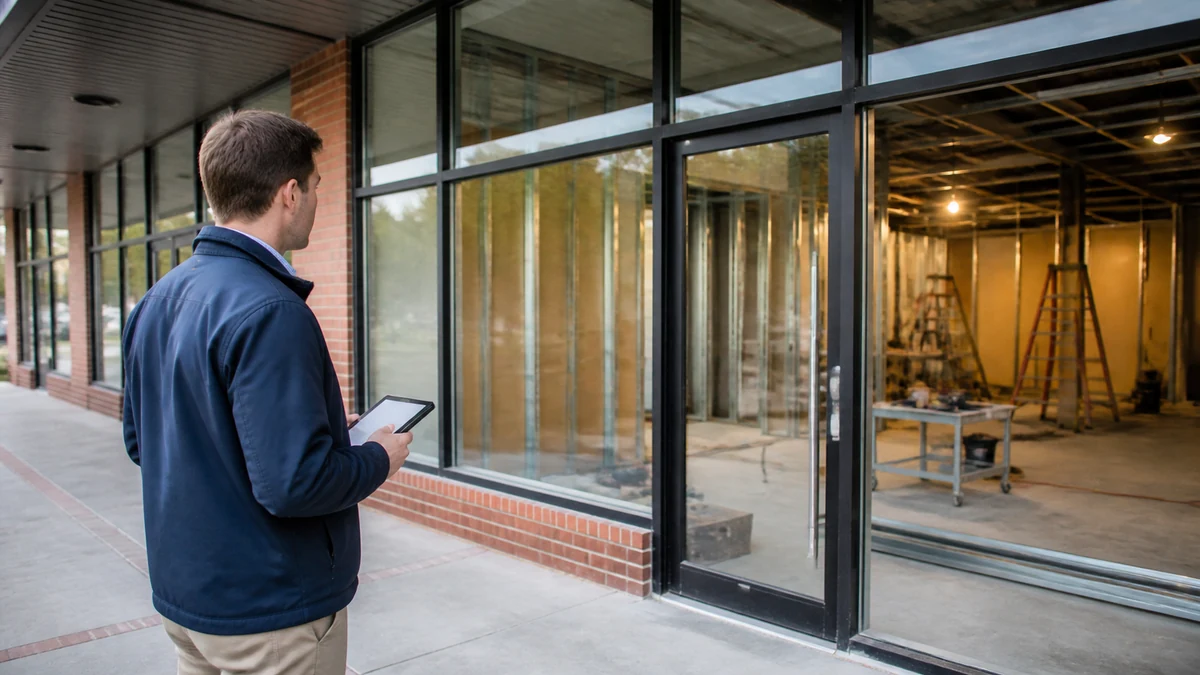
If you're still knocking from a recycled list, you're already late. Permit data for outside sales gives you something most reps never get - timing. Not guessed timing, not vague intent data, but real local activity tied to a location, a project, and a window to show up before the pack does.
Outside sales depends on territory timing as well as volume. A new restaurant buildout, retail renovation, or contractor pulling permits across town can each support a timely conversation.
Why permit data for outside sales works
Most prospecting data tells you what a business was. Permit records often tell you what it's about to become. That's the edge.
A new permit can signal a business opening, tenant improvement, remodel, ownership transition, major equipment install, or expansion. For an outside rep, those records mark buying moments. When a business is spending money, changing operations, or preparing to open, the odds of a sales conversation go up.
Raw lists underperform in the field because static databases are often broad, stale, or detached from real-world action. You can spend half your day driving to places that closed months ago or pitching accounts with no reason to change anything. Permit-based prospecting helps you work active ground.
Permit data is useful when it's current, filtered, and tied to a sales workflow. Sort the public records by geography, project type, permit value, and freshness, then turn them into stops on a route.
What permit records tell a field rep
Outside sales teams do best when they read permit activity as a sales signal. A permit by itself is a filing. In context, it tells you what kind of conversation to start.
A new commercial build or tenant improvement usually means a business is investing in the space. That could mean they need payment processing, telecom, uniforms, janitorial, waste service, security, staffing, insurance, supplies, or any number of local B2B services. A kitchen permit at a food concept suggests equipment decisions, vendor setup, and launch prep. Electrical and mechanical work can point to contractors, service vendors, or support needs. Business license activity can add another layer by showing that a location is heading toward operation.
Good reps don't treat every permit the same. A minor repair may not be worth a stop. A large-value commercial renovation in your vertical probably is. Filter for projects that create urgency and fit your sale.
How outside reps should use permit data in the real world
Use permit data as a daily field list that requires only brief qualification.
Start with territory. Pull records by ZIP code, city, county, or drive radius, then narrow by the types of projects that match your product. If you sell into local businesses, focus on openings, buildouts, major renovations, and license activity that signals a location is getting ready to operate. If you sell into contractors or commercial services, look for permit categories that point to the trades, scopes, and job sizes that matter to you.
Then work by timing. Freshness matters more than volume. A smaller list from the last few days is usually better than hundreds of old records. Outside reps win by showing up while the decision is still forming, not after the business has already lined up vendors.
After that, route it. Teams waste good data when they treat a local lead like a call-center record. In field sales, lead quality and route efficiency go together. If you can cluster live permit records by area and build your day around them, you increase at-bats without burning windshield time.
The conversation also changes when you walk in informed. You're not opening with a generic pitch. You're opening with context. You know they're building, opening, expanding, or upgrading. That makes you sound like someone who understands the local market, not someone working through a script.
Where reps get this wrong
Some teams hear "permit data" and think more records automatically means more pipeline. It doesn't. Bad filtering creates busywork.
One common mistake is chasing residential noise when your sale is commercial. Another is treating every permit as equal when permit type, project value, and stage matter a lot. Reps also lose time when records are incomplete, addresses are weak, or the data is old enough that the window has passed.
The other mistake is speed without strategy. Finding a permit this morning does not make a cold-stop message relevant this afternoon. A location under heavy construction may need a different approach than a business opening in two weeks. Choose an early introduction, a timed follow-up, or a pass based on the project stage.
That "it depends" piece is real. Permit data improves timing, but reps still need judgment.
What good permit data for outside sales should include
If the data is meant for field prospecting, it should be built for action, not analysis theater.
You need current records, exact locations, and categories that make sense to a salesperson instead of raw municipal codes. You need search that accepts plain-English questions. And you need to export, sort, save, and route records fast enough that the data makes it into your day.
Quality control matters more than people admit. Public records can be messy. If bad records stay in circulation, reps lose trust fast. Once that happens, the data gets ignored and the team drifts back to stale lists because at least those feel familiar.
This is the real gap between generic databases and purpose-built permit lead platforms. Generic tools are built to collect names. Field reps need usable local signals they can move on today. That's why platforms like PermitPub focus on live lead inventory, filtering, route planning, and sales-ready records instead of dumping raw public data on the user and calling it intelligence.
The payoff is better territory economics
Outside sales has always been a game of limited hours and finite miles. Permit-driven prospecting improves both.
When reps work from live project activity, they stop spending prime selling time on random drop-ins. Their routes get tighter. Their conversations get warmer. Their close rates improve because they're showing up when money is already moving.
That doesn't mean permit data replaces every other prospecting method. Referrals still matter. Existing account expansion still matters. Cold prospecting still has a place. But if you're trying to create first-mover advantage in a local market, permit signals are one of the cleanest ways to do it.
They help reps see what the territory is becoming. That matters when your number depends on finding the next buyer before somebody else parks in front of the building.
A strong outside rep already knows how to win face to face. The missing piece is often knowing where to go next. Permit data points to current activity so the rep can choose the next stop.